Home Health Basics
What Happens at a Skilled Nursing Home Health Visit
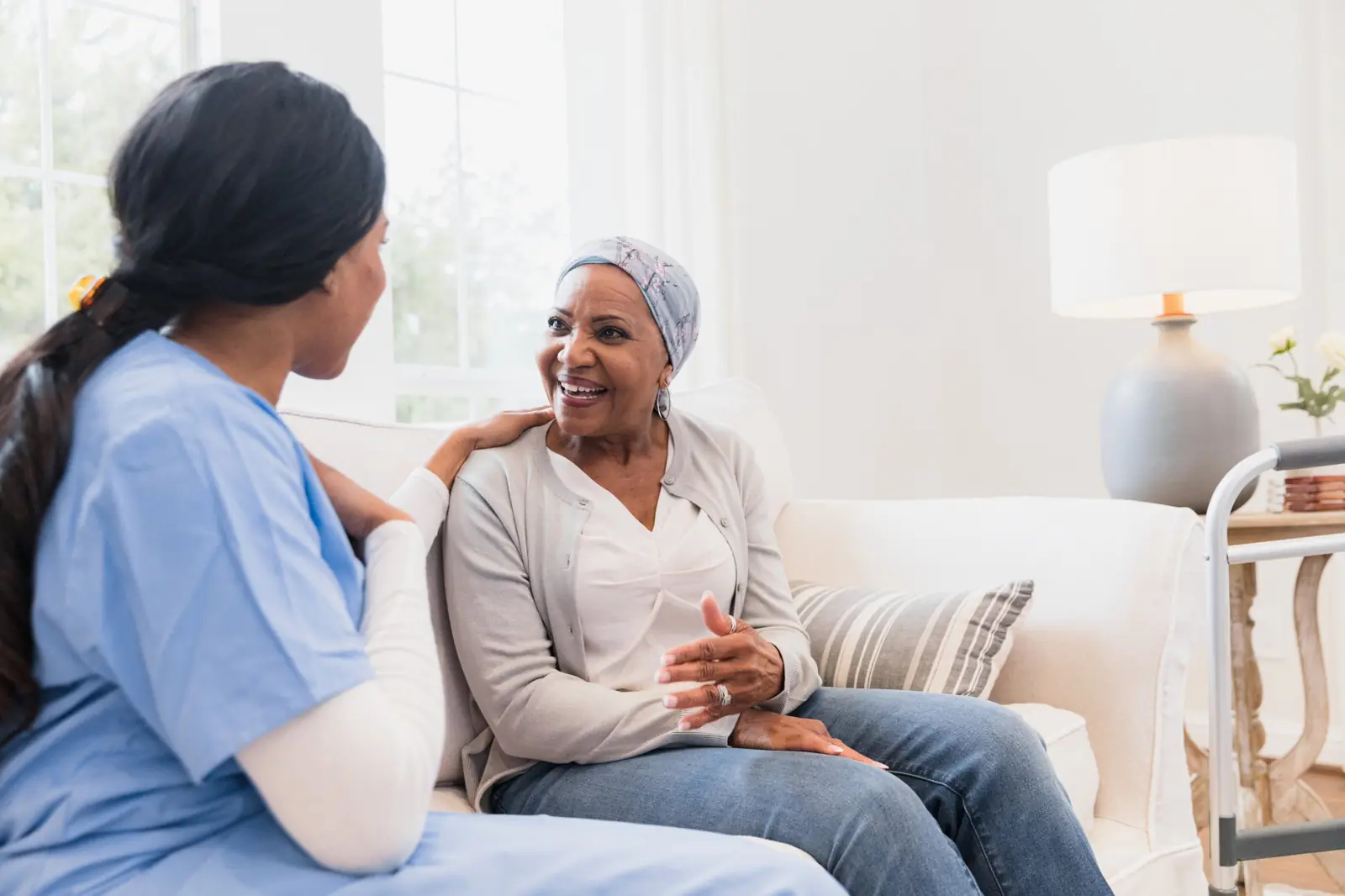
A skilled nursing home health visit is a medical appointment that happens in your living room. A licensed nurse comes to the home on a schedule your doctor orders, checks how the patient is doing, gives treatments that need clinical training, and teaches the family what to watch for between visits. That's the core difference from non-medical home care, where a caregiver helps with daily tasks like bathing, meals and errands but doesn't provide medical treatment.
Families mix these two up all the time, and it matters. The wrong choice can leave a person recovering from surgery without anyone checking the incision, or leave someone paying privately for help that a doctor's order might have covered.
Key Takeaways - Skilled nursing home health is ordered by a doctor and delivered by licensed nurses and therapists. Non-medical home care is help with daily living and needs no order. - A typical nursing visit includes a health check, a hands-on treatment, a medication review and teaching for the patient and family. - Medicare describes the goal of home health as helping you get better, hold steady, or slow decline (Medicare.gov). - Many families use both types of care at once, with the nurse handling medical needs and a caregiver covering daily help.
How Skilled Home Health Differs From Non-Medical Home Care
Skilled home health care is medical care given at home by licensed clinicians under a doctor's plan. Medicare's own definition calls it "a wide range of health care services that you can get in your home for an illness or injury," and lists examples such as wound care, IV or nutrition therapy, injections, and monitoring of unstable health (Medicare.gov).
Non-medical home care is help with activities of daily living, such as bathing, dressing, cooking, light housekeeping and companionship. In California, the Department of Social Services describes home care aides as people who "provide assistance with activities of daily living," and it has required Home Care Organizations to hold a license since January 2016 (California Department of Social Services).
Here's how the two compare side by side.
| Skilled home health | Non-medical home care | |
|---|---|---|
| Who provides it | Registered nurses, licensed vocational nurses, physical, occupational and speech therapists, medical social workers, home health aides | Caregivers and home care aides |
| Doctor's order needed | Yes | No |
| Typical services | Wound care, IV therapy, injections, medication teaching, disease monitoring, therapy | Bathing, dressing, meals, errands, companionship |
| Visit pattern | Short, scheduled visits based on the care plan | Hourly shifts, sometimes live-in |
| Medicare coverage | Can be covered if eligibility rules are met | Not covered when it's the only care needed (Medicare.gov) |
One detail surprises people. Under Medicare, a home health aide is covered only when the patient is also getting skilled nursing or therapy (Medicare.gov). The aide supports the skilled plan. It isn't a stand-alone personal care benefit.
What a Nurse Does During a Typical Visit
Every visit follows the care plan, so no two look exactly alike. Still, most skilled nursing visits include the same building blocks.
A focused health assessment
The nurse checks vital signs (blood pressure, heart rate, breathing, temperature and oxygen level) and compares them with the last visit. Then the nurse looks at whatever the doctor is worried about. For example, a patient home after heart surgery gets a close look at the incision, leg swelling and breathing. A patient with diabetes gets a blood sugar review and a foot check.
Hands-on skilled care
This is the part a family member usually can't do safely without training. Depending on the orders, it may include the following.
- Wound and pressure injury care, including negative pressure wound therapy (wound vac)
- IV therapy and infusions, plus care of PICC lines, midlines and ports
- Injections and in-home lab draws
- Catheter, ostomy and feeding tube care
- Pain management and palliative comfort measures
A medication review
The nurse goes through every bottle in the house, old and new. Hospital discharge often changes doses or adds drugs, and old bottles stay in the cabinet. The CDC reports that adults 65 and older visit emergency departments more than 600,000 times a year because of adverse drug events (CDC). A careful review at the kitchen table is one of the most useful things a nurse does.
Teaching the patient and family
Medicare lists "patient and caregiver education" as a skilled nursing service in its own right (Medicare.gov). A good nurse teaches in small pieces and asks you to show it back. That might mean changing a simple dressing, flushing a line, or knowing which symptoms mean "call the nurse today" versus "call 911 now."
Reporting to the doctor
After the visit, the nurse documents findings and updates the physician when something changes. Medicare notes that the agency keeps your provider "updated on your progress" (Medicare.gov). If a wound looks worse or blood pressure is climbing, the doctor hears about it the same day, not at the next office visit weeks later.
The Rest of the Home Health Team
Nursing is often the center of the plan, but it rarely works alone. A doctor can order other disciplines, and the nurse coordinates them.
- Physical therapists rebuild strength, balance and walking after a hospital stay or surgery.
- Occupational therapists work on daily tasks such as bathing, dressing and getting on and off the toilet safely.
- Speech therapists help with swallowing problems and with speech or memory changes after a stroke.
- Medical social workers help with community resources, long-term planning and the emotional strain of illness.
- Home health aides assist with personal care while skilled services are under way.
Fall risk is a common reason to bring in therapy. The CDC reports that over 14 million older adults, or 1 in 4, report falling every year (CDC). A home safety assessment looks for loose rugs, poor lighting, missing grab bars and medications that cause dizziness.
Signs Your Family Member Needs Skilled Nursing Care
Non-medical help is the right fit when the main problem is daily tasks. Skilled home health is the right fit when there's a medical need that requires a nurse's judgment. Consider skilled care if any of these apply.
- They just came home from the hospital, a rehab facility or surgery.
- They have a wound, surgical incision or pressure injury that needs dressing changes.
- They have an IV line, PICC line, catheter, ostomy or feeding tube.
- Their medications changed and nobody is sure the new list is right.
- They have heart failure, COPD, diabetes or high blood pressure that isn't stable.
- They've fallen recently, or they're unsteady and afraid of falling.
Skilled care can also help when the goal is holding steady rather than getting better. Medicare's policy manual states that coverage for skilled care "does not turn on the presence or absence" of a patient's potential for improvement, and that skilled care may be needed "to prevent or slow further deterioration" (CMS Medicare Benefit Policy Manual, Chapter 7).
Using Both Types of Care Together
Plenty of families use both. A nurse might visit twice a week for wound care and medication checks, while a private caregiver helps with meals and bathing every day. The two roles complement each other. Just make sure the caregiver knows the warning signs the nurse taught you, and keep the nurse's phone number posted on the refrigerator.
Medicare explains that home health covers part-time or intermittent care, usually up to 8 hours a day combined and 28 hours a week at most (Medicare.gov). It doesn't cover 24-hour care at home. If your family member needs someone there around the clock, you'll likely need non-medical help as well. Our guide to Medicare home health coverage and the homebound rules walks through eligibility in more detail.
Questions to Ask Before Care Starts
Before the first visit, ask the agency these questions. A good agency will answer them plainly.
- Which services did the doctor order, and how often will the nurse come?
- Who do we call after hours, and how fast does someone respond?
- Will the same nurse come each time, or will it rotate?
- What will insurance pay, and is there anything we'll owe?
- Which symptoms should make us call the nurse, and which mean 911?
If your family member was just discharged, our article on the first 30 days after a hospital stay covers what to set up in the first week. For specific conditions, see wound care and signs of infection and managing heart failure at home.
Sources and Methodology
Editorial note. This article draws on federal sources, including Medicare.gov, the CMS Medicare Benefit Policy Manual and the CDC, plus the California Department of Social Services. Each statistic links to the page it came from. Coverage rules change, so confirm current details with your plan or the agency. You can learn more about Violet Home Care Agency and our nursing leadership.
This article is general information, not medical advice. It doesn't replace your doctor's instructions. If you think someone is having a medical emergency, call 911.
Talk With a Nurse in the San Fernando Valley
Violet Home Care Agency provides skilled nursing and coordinated therapy at home across the San Fernando Valley, including Canoga Park, Woodland Hills, West Hills, Winnetka, Reseda, Chatsworth, Northridge, Tarzana, Encino, Van Nuys, Calabasas and Porter Ranch. If you're unsure whether your family member needs skilled care, contact our Canoga Park office at 20944 Sherman Way, Suite 206-A, and we'll talk it through with you.